Overview
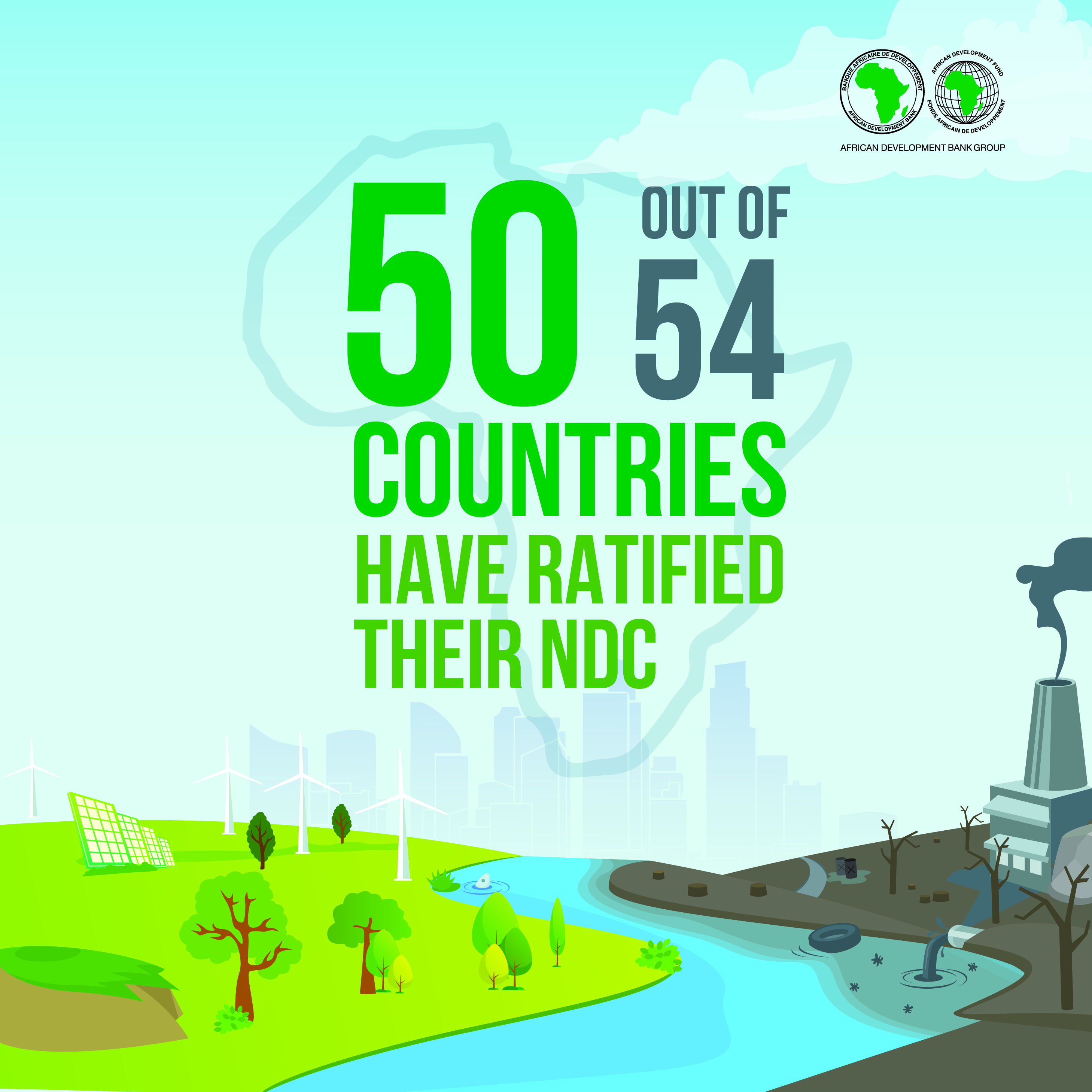
With the coming into effect of the Paris Agreement in November 2016, Nationally Determined Contributions (NDCs) occupy a central place in determining progress and raising ambition. As of November 2018, 189 Parties to the UNFCCC had ratified their NDCs; including 50 African countries. For developing countries achieving progress and enhanced ambition requires concerted efforts invested in deploying means of implementation (finance, technology transfer and capacity-building). The urgency of action has become most critical with release of the recent IPPC Report, Global Warming of 1.5OC, which warns of the closing window of opportunity to avoid onset of dangerous effects of global temperature rise.
The world must to act! It is for this purpose that regional NDC Hubs have been established to mobilize regional efforts to drive climate action focusing on regional strengths and unique challenges. Regional Hubs embody the essence of the Talanoa – local engagement on where are we? where do we want to go? and how do we get there? This is in line with Paris Agreement (para 45) which calls for strengthening of regional cooperation and the establishment of regional centres and networks, in particular in developing countries. The countries served by the three Regional NDC Hubs have a lot in common, in terms of increased vulnerability to climate change impacts and limited capacity address them.
This event provides a platform for the Africa NDC Hub, the Pacific NDC Hub and the Caribbean NDC Hub to share experience, leverage each other’s best practices and devise common strategies to solve common problems in a manner that promotes south-south cooperation.
Format
Moderator: Ms. Davinah Milenge Uwella, Coordinator, Africa NDC Hub, African Development Bank
Welcome Remarks: Mr. Amadou Hott, Vice President, Power, Energy, Climate Change and Green Growth
Presentation of the Africa NDC Hub: Dr. Anthony Nyong
NDC Country/Regional Perspectives:
Ms. Rajae Chafil, Director, Competence Center for Climate Change Morocco (4C Maroc)
Mr.Stephen King’uyu, Deputy Director, Climate Change Directorate, Ministry of Environment and Forestry, Kenya
Ms. Sara Guibunda, Environment Division, Ministry of Agriculture, Mozambique
Mr. Crispin d’Auvergne, Coordinator Climate Change and Disaster Risk Management, Caribbean NDC Financing Initiative, Organisation of Eastern Caribbean States (OECS) Commission
Ms. Sylvie Goyet, Coordinator Pacific NDC Hub
Moderated Panel Discussion:
Mr. Zitouni Ould-Dada, Deputy-Director, Climate and Environment Division, FAO
Mr. Frank Rijsberman, Director General, Global Green Growth Institute (GGGI)
Mr. Cameron Diver, Deputy Director General, Pacific Community
Mr. Jahan Chowdhury, Director Country Engagement, NDC Partnership Support Unit
Mr. Ahmed Al Qabany, Manager Climate Change, Islamic Development Bank
Mr. Crispin d’Auvergne, Coordinator Climate Change and Disaster Risk
Management, Caribbean NDC Financing Initiative, Organisation of Eastern Caribbean States (OECS) Commission
Q&A Session
*Africa NDC Hub partner institutions, and other strategic partners present who wish to speak will be given an opportunity to speak before the Q&A
Take-away messages and Closing (Moderator)
I. Brief on the Regional NDC Hub
Africa NDC Hub:
The Africa NDC Hub was launched at COP 23 in Bonn, Germany as a response to the call by African countries for support towards the implementation of their NDCs. The Africa NDC which is hosted at the African Development Bank brings together development partner institutions to harmonize interventions intended for NDC implementation. Currently, the Africa NDC Hub memberships stands at 15 member institutions: African Development Bank (AfDB), African Union Commission (AUC), Centre de Competences Changement Climatique du Maroc (4C Maroc); Economic Community of West Africa States (ECOWAS); Food and Agriculture Organisation of the United Nations (FAO); Global Green Growth Institute (GGGI); International Institute for Environment and Development (IIED); International Trade Centre (ITC); Islamic Development Bank (IsDB); New Partnership for Africa’s Development (NEPAD); United Nations Development Programme (UNDP); United Nations Economic Commission for Africa (UNECA); United Nations Environment Programme (UN Environment); United Nations Framework Convention on Climate Change (UNFCCC); World Wildlife Fund (WWF).
Goal: To meet the long-term mitigation and adaptation goal of the Paris Agreement
Specific Purpose: To help African Countries achieve the NDC targets by 2030
Expected Outcomes: Outcome 1: Long term climate action fostered – based on country driven processes aligned with the Paris Agreement, sustainable Development Goals (SDGs) and the Africa Agenda 2063; Outcome 2: Increased mobilization of means of implementation and transparency; Outcome 3: Implementation of NDCs through increased advocacy and strong partnerships, within the African context.
Pacific NDC Hub:
Background:
First envisaged at the Climate Action Pacific Partnership meeting in 2017 and formally launched at COP23 by the Hon. Prime Minister of Fiji and COP23 President Bainimarama, the Pacific NDC Hub is being established to support Pacific Island Countries towards achieving their ambition of limiting global temperatures to 1.50C through their NDCs.
Objective:
The overall objective of Pacific NDC Hub is for Pacific Island Countries to enhance and implement their NDCs, driving sustainable and resilient development and a transition to a low carbon development pathway. The NDC Hub will provide technical and facilitate partnerships to enhance and implement the region’s NDCs. The NDC Hub builds upon existing networks and mechanisms in the region. It contributes and aligns to national climate change policies and frameworks, including the Framework for Resilient Development in the Pacific and the Regional Technical Support Mechanism.
Structure:
Membership: National Focal Points – currently 13 out of 14 Pacific Island governments have nominated their focal points for the Pacific Nationally Determined Contributions Hub.
Operationalizing the Hub:
Under the institutional framework of the NDC Partnership, the Regional Pacific NDC Hub is a collaborative effort by Pacific Island Countries, GIZ, GGGI, the NDC Partnership Support Unit (NDCP SU), the Pacific Community (SPC), and the Secretariat for the Pacific Regional Environment Programme (SPREP), with initial funding of 2.1 million Euros from the UK, Australia, and Germany
The Caribbean NDC Hub:
NDC Assist supports the government of Saint Lucia and the Organisation of Eastern Caribbean States (OECS) to implement a regional NDC Investment Initiative.
In 2017, the Organisation of Eastern Caribbean States (OECS) Council of Ministers for Environmental Sustainability (COMES) mandated the OECS Commission to support Member States (Anguilla, Antigua & Barbuda*, British Virgin Islands, Dominica*, Grenada*, Martinique, Montserrat, St. Kitts & Nevis*, Saint Lucia* and Saint Vincent & the Grenadines* (* = independent country and individually signatory to the Paris Agreement) in the implementation of their NDCs. In 2017, the OECS, together with the Government of Saint Lucia, the UNFCCC and the NDC Partnership, and with support from GIZ, established the Caribbean NDC Finance Initiative (NDCFI). The NDCFI seeks to accelerate NDC investment through engagement of the public and private sectors, the development community and civil society.
The first NDC Investment Forum, held in Saint Lucia in October 2018, brought together over 120 representatives from the aforementioned sectors/communities. It identified key investment opportunities and barriers and critical next steps. Key sectors identified for investment include Water, Energy (including Transport) and Other Critical Infrastructure. Barriers include, capacity to develop pipelines of projects ready for investment, legislative and policy gaps and inadequacies and absence, in some cases, of detailed national assessments that can serve as the basis for determining