

You are here
News
Access to climate finance for African countries: an arduous journey but possible with south-south learning

Is Africa ready for scaled up direct access to climate finance? the answer is yes, but the process is long, and African institutions may often be best placed to help their peers through south-south exchange.
COP24: The African Development Bank out in force to defend the continent's interests and vision in the fight against climate change
The 24th annual conference of the United Nations Convention on Climate Change, known as COP24, opens on Monday, 3 December 2018, in Katowice, Poland.
The Bank at the forefront of Climate Change and ready to ensure the voice of 54 African countries is heard.
Six of 20 most vulnerable countries are African

With more than 20,000 participants from over 190 countries, COP24 commenced in the hope that countries will create a rulebook that will turn the Paris climate agreement into reality and hold down rising temperature to well below 2 degrees. During the conference, countries focused on establishing rules, figuring out financing and devising ways to verify that nations are meeting their commitments. "we are in deep trouble with climate change," said UN Secretary-General Antonio Guterres during his speech at the conference
Building Partnerships to deliver Africa’s Paris Agreement commitments

African countries made ambitious commitments to respond to climate change in their Nationally Determined Contributions (NDCs) - a set of commitments necessqry for determining progress and raising ambition since the Paris Agreement came into effect in November 2016. As of November 2018, 189 Parties to the UNFCCC had ratified their NDCs, including 90% of African countries.
Powering Small Developing Island States with 100% renewable energy
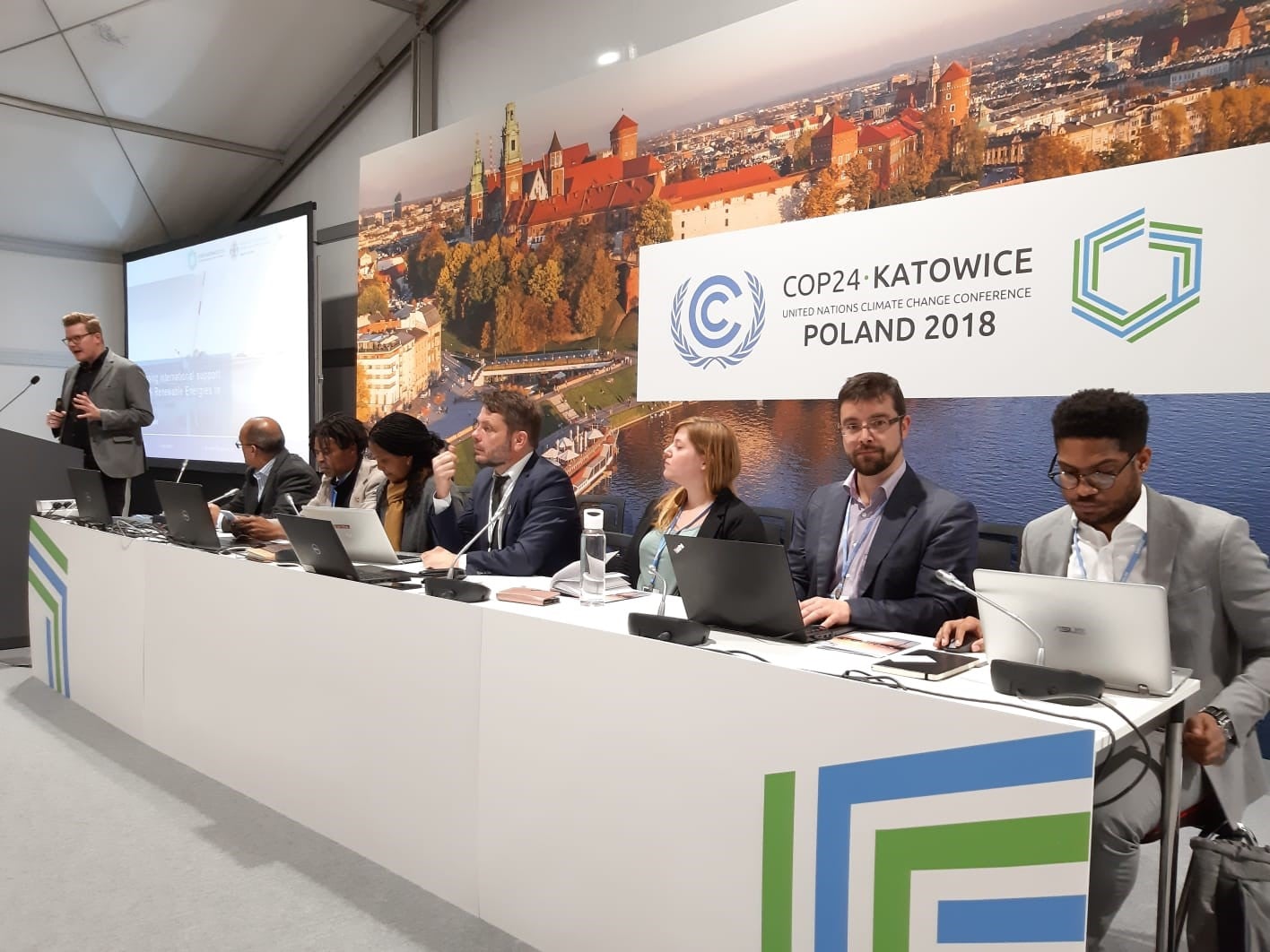
At the 24th United Nations Climate Change Conference of Parties (COP24), in Katowice, Poland, the global community fleshed out the rules to govern the Paris Agreement. Rules necessary to ensure the most vulnerable communities are not left alone to deal with the adverse effects in a world in which global warming has risen above 1.5°C.
COP24: Africa Day calls for increased partnership to accelerate Africa’s low-carbon, climate-resilient development pathway
The opening day of COP24 Leader’s Summit was marked by the celebration of Africa Day which focused on how the implementation of Africa’s Nationally Determined Contributions for a healthy environment can accelerate development on the continent.
Africa’s quest for a sustainable future will ride on the back of resiliency, financing and planning mechanisms
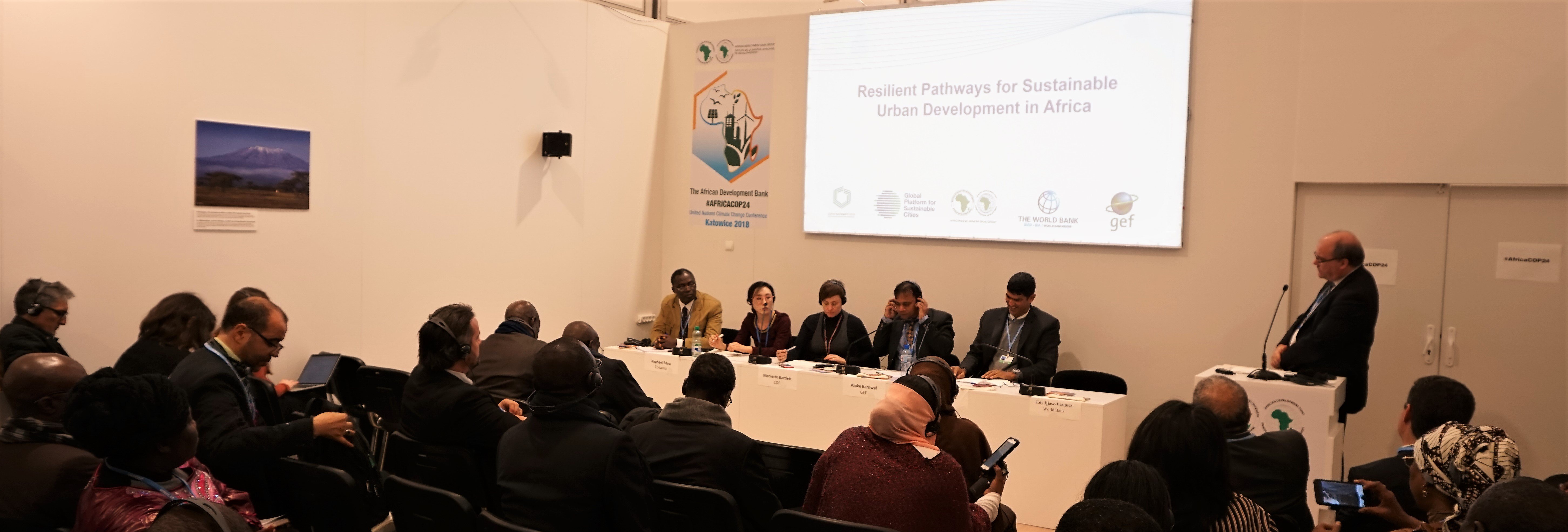
This year’s UN Climate Summit (COP24) has come and gone. For the over 20,000 partiticpants who made the journey to Katowice, Poland for the summit, COP24 was mostly about getting global attention for the climate change issues in their respective jurisdictions. For delegates from Africa, the summit was more than a show-shop: COP24 was an opportunity for the continent to recalibrate its climate change aspirations and credentials.
Supporting transboundary actions to address climate change
Approximately 64% of the African Continent is found within a transboundary river or lake basin, or sits on a transboundary aquifer, containing 805 freshwater resources. As climate change exacerbates challenges already inherent in Africa’s hydrological cycle, and affects different parts of a watershed differently, it is clear that there is a need to highlight the importance of transboundary perspectives in adaptation and decision-making, and support efforts to include these within states planning and actions, including finance activities.
Curtain falls on COP24 in Poland: African Development Bank more resolute than ever to fight against climate change in Africa
Abidjan, Côte d’Ivoire, 18 December 2018, – The curtain has fallen on COP24, this year’s global climate summit held in Katowice, Poland. However, negotiations continued throughout the weekend to reach agreement on specific parts of the 'rulebook' to be applied from 2020 by the 197 signatories of the Paris Agreement, to limit global warming to 2°C-1.5°C relative to pre-industrial levels.
Fossil fuel extraction in Africa: carbon risks and economic realities

To achieve its Nationally Determined Contributions and reduce dependence on high-carbon sectors, Africa needs to strengthen its policies, build institutions and mechanisms to strengthen governance, and attract climate investment.